
How to detail any LEGO MOC: the small stuff that sells it
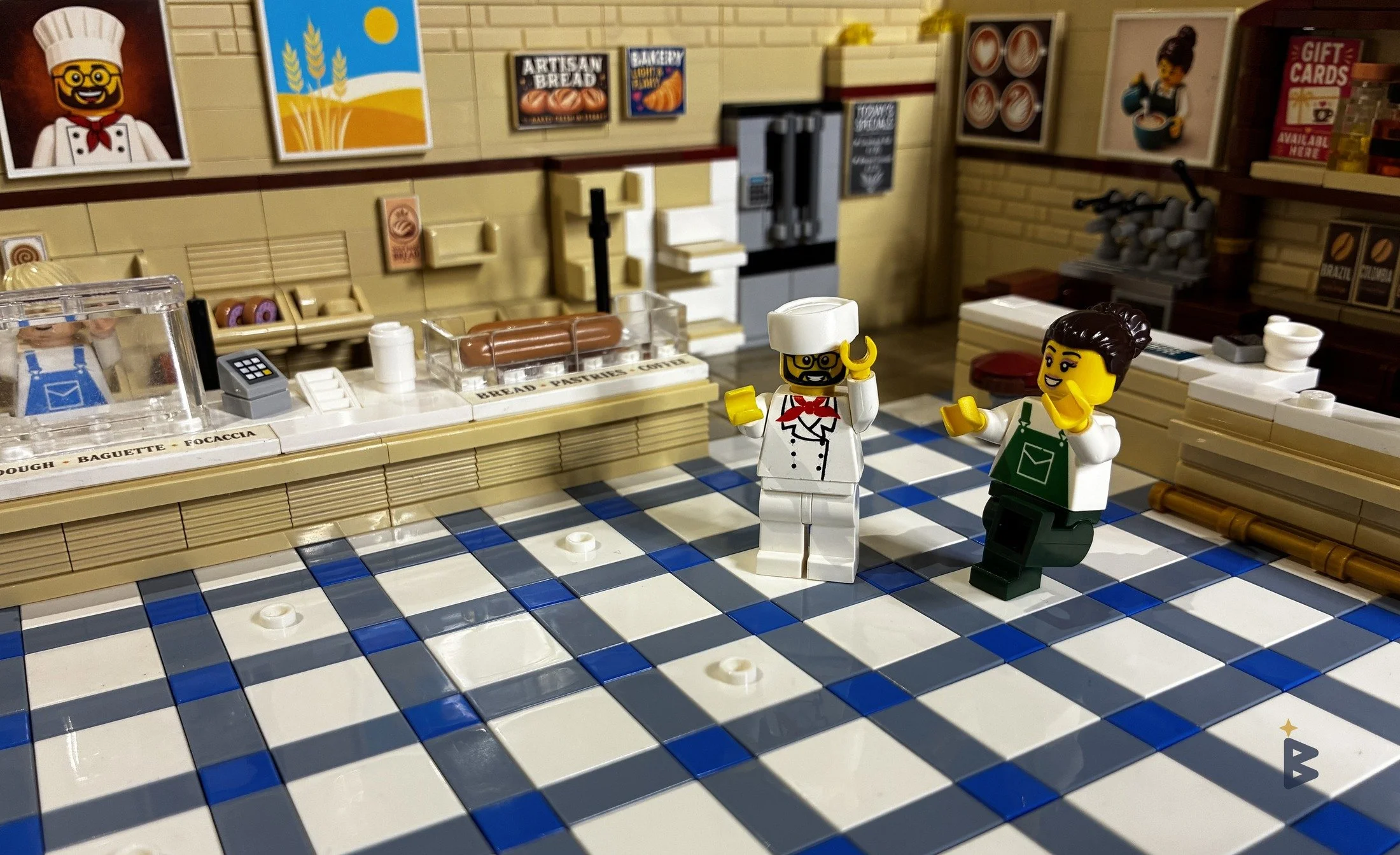
You can spend weeks on a build, get every brick right, and still feel that it reads as a model rather than a place. The gap is almost never structural. It is the layer of small printed things that real buildings are covered in and models usually are not.
Think about what a real version of your build would have stuck, painted or pinned to it. A shop has a sign, prices and posters. A street has speed limits and name plates. A station has a departure board. A wizard’s study has labels on every jar. None of it is load-bearing, and all of it is the difference between a structure and somewhere someone works. The rule of thumb: if a real owner would have printed it, your build wants it too.
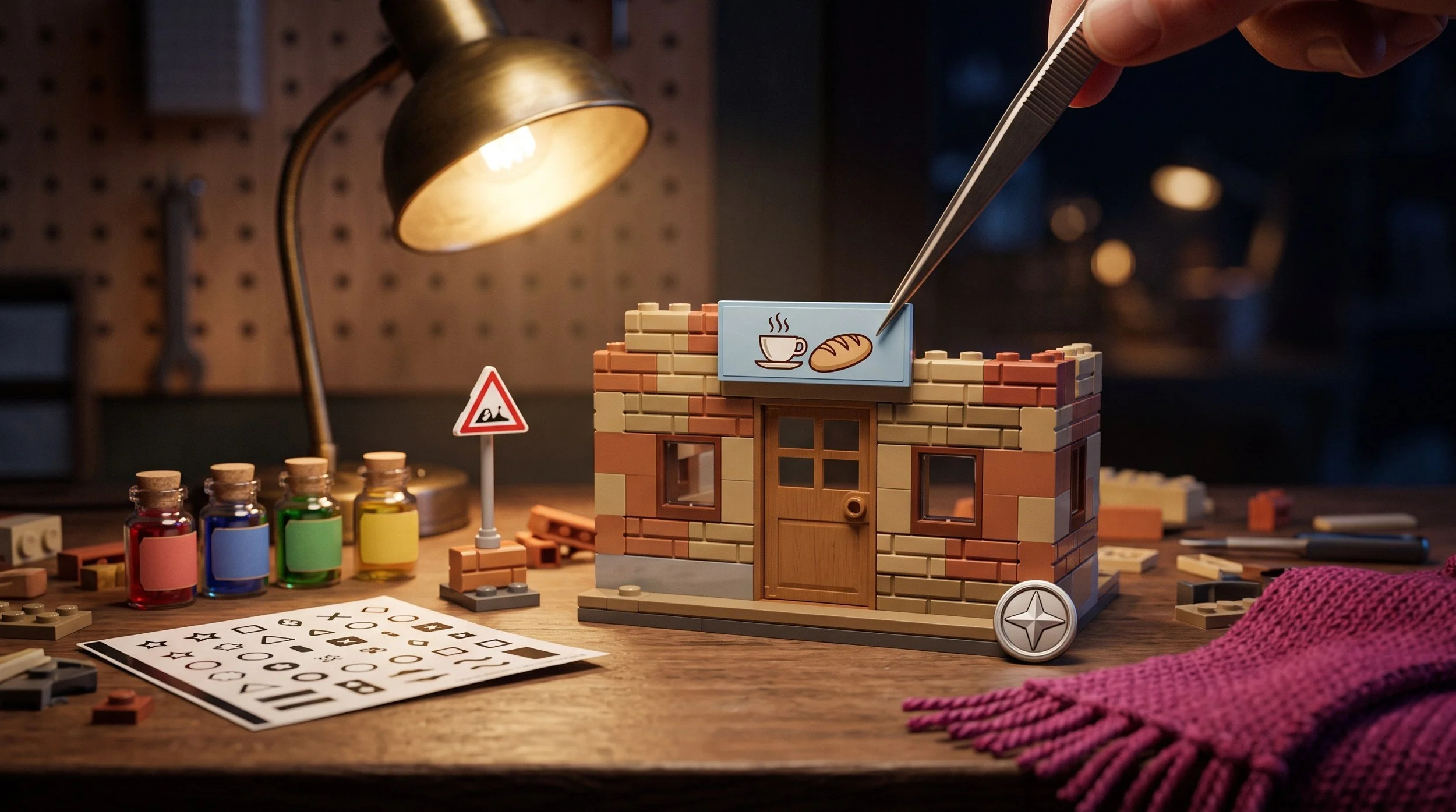
The last layer goes on at night. Somebody always leaves a mark.
Two things make it work. First, restraint, a few well-placed details beat a wall of clutter every time. Second, imperfection, one slightly crooked sign reads as more real than ten perfect ones, because real places are lived in.
That layer is the whole idea of the shop. Every sheet is the printed detail for a kind of build, café, bakery, street, screens, apothecary and more, and you cut the decals out and place them yourself. Browse the sheets and find the one that fits what you are making.
