
LEGO MOC build guides and detailing ideas
How to make a brick-built place look like a real one. Practical guides to detailing your MOC, notes from our own builds, and the occasional story from the street. A new post every week.
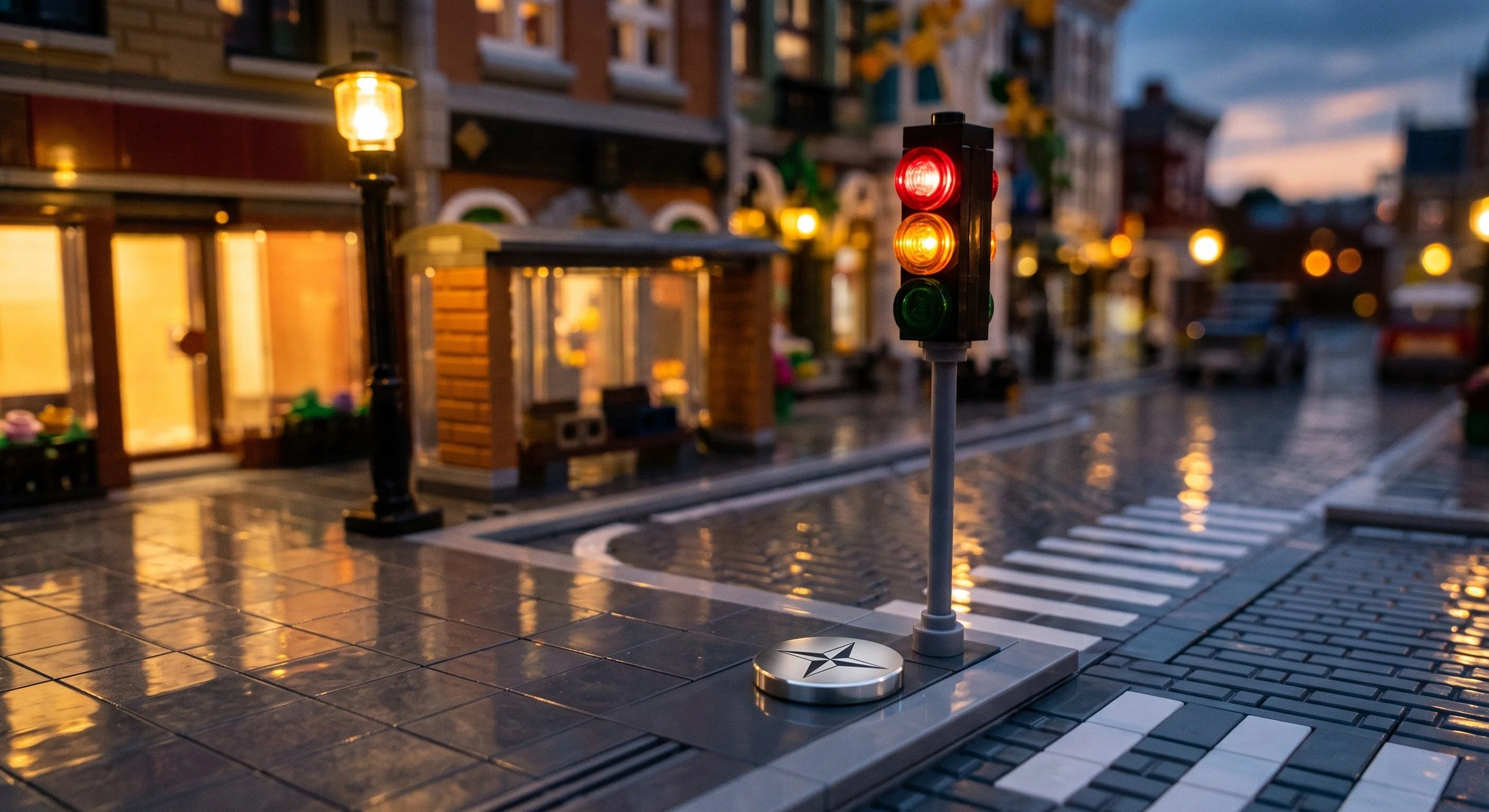
LEGO traffic lights: red, amber or green for your city junction
A traffic light is the one sign on your street that tells a story. How to pick the moment, place the lights at a junction, and get them on a tile in seconds.
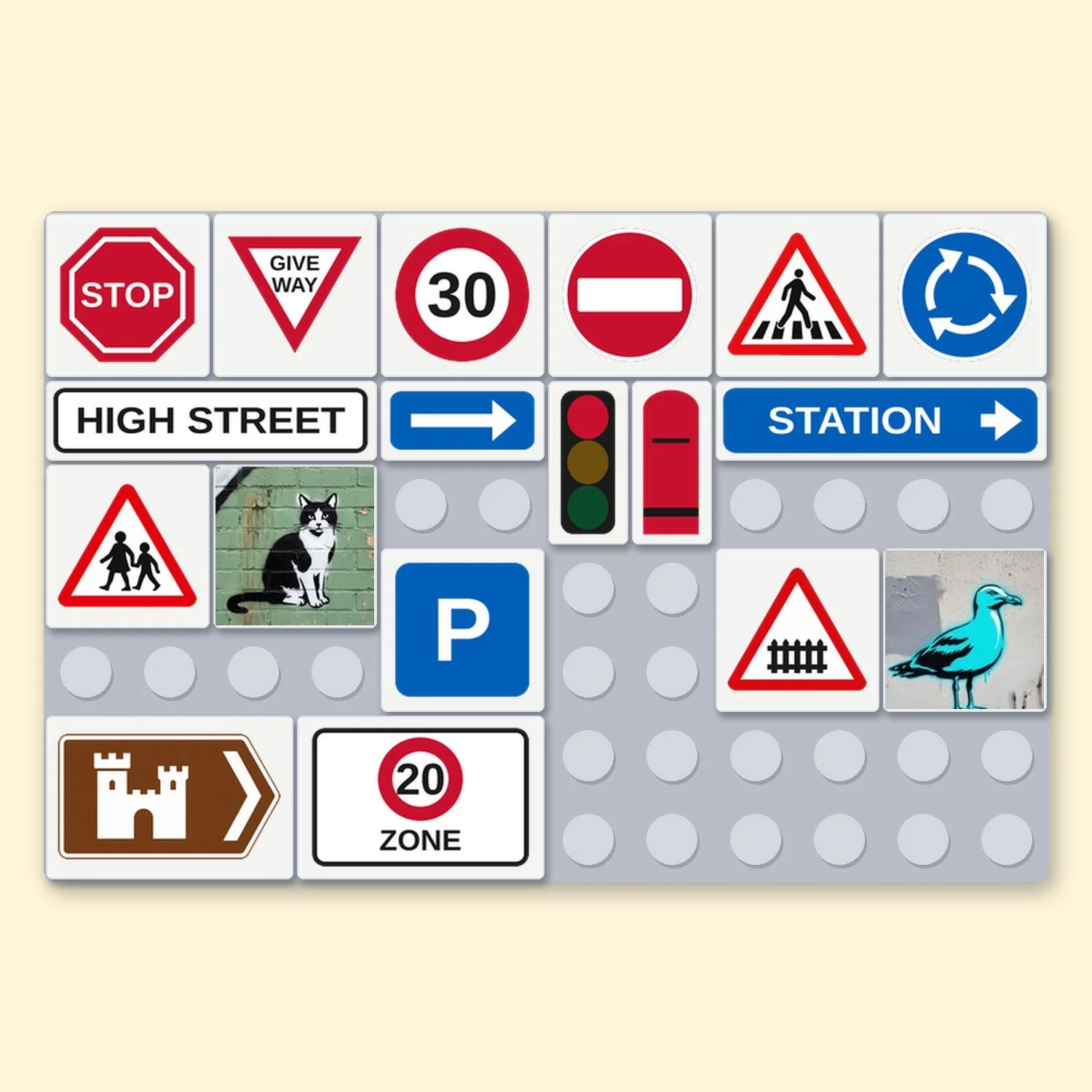
Printed tiles, stickers or a ready-made pack: which suits your city?
Printed tiles, a sticker sheet you cut out yourself, or genuine tiles that arrive with the stickers already on. Three ways to put detail on a build, and how to choose.
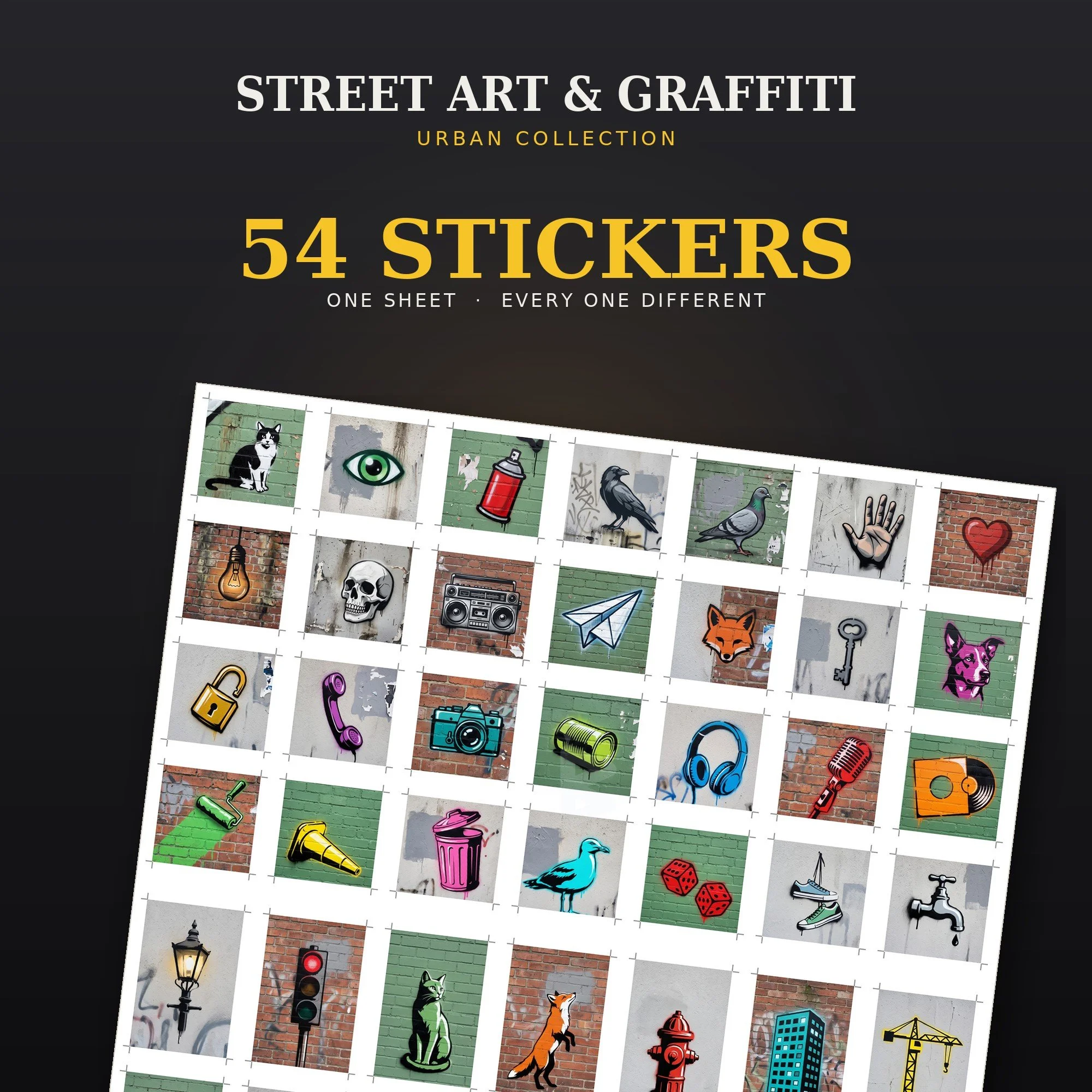
LEGO Graffiti: How to Make Street Art Look Real at Brick Scale
Most LEGO graffiti looks like a picture stuck to a brick. Real street art is the paint and the wall together. What we learned making our own street art sheet, and where graffiti belongs in a LEGO city: walls, shutters and trains.
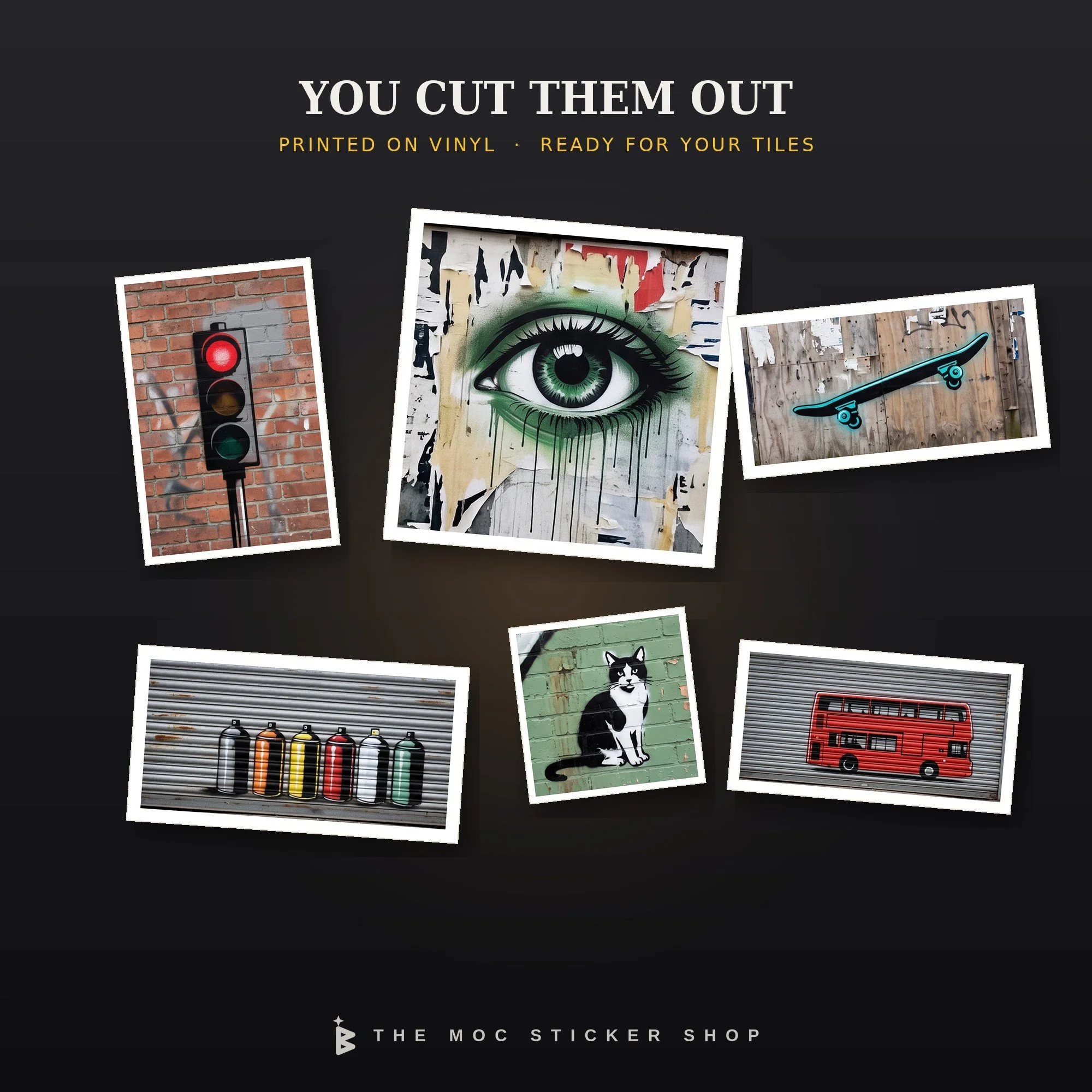
LEGO Alleyway MOC: Dressing the Back of the Street
Every LEGO city has a front and a back, and the back is where the character is. How to turn the gap between two modular buildings into an alleyway that looks lived in: doors with owners, shutters, bins and street art in the right places.
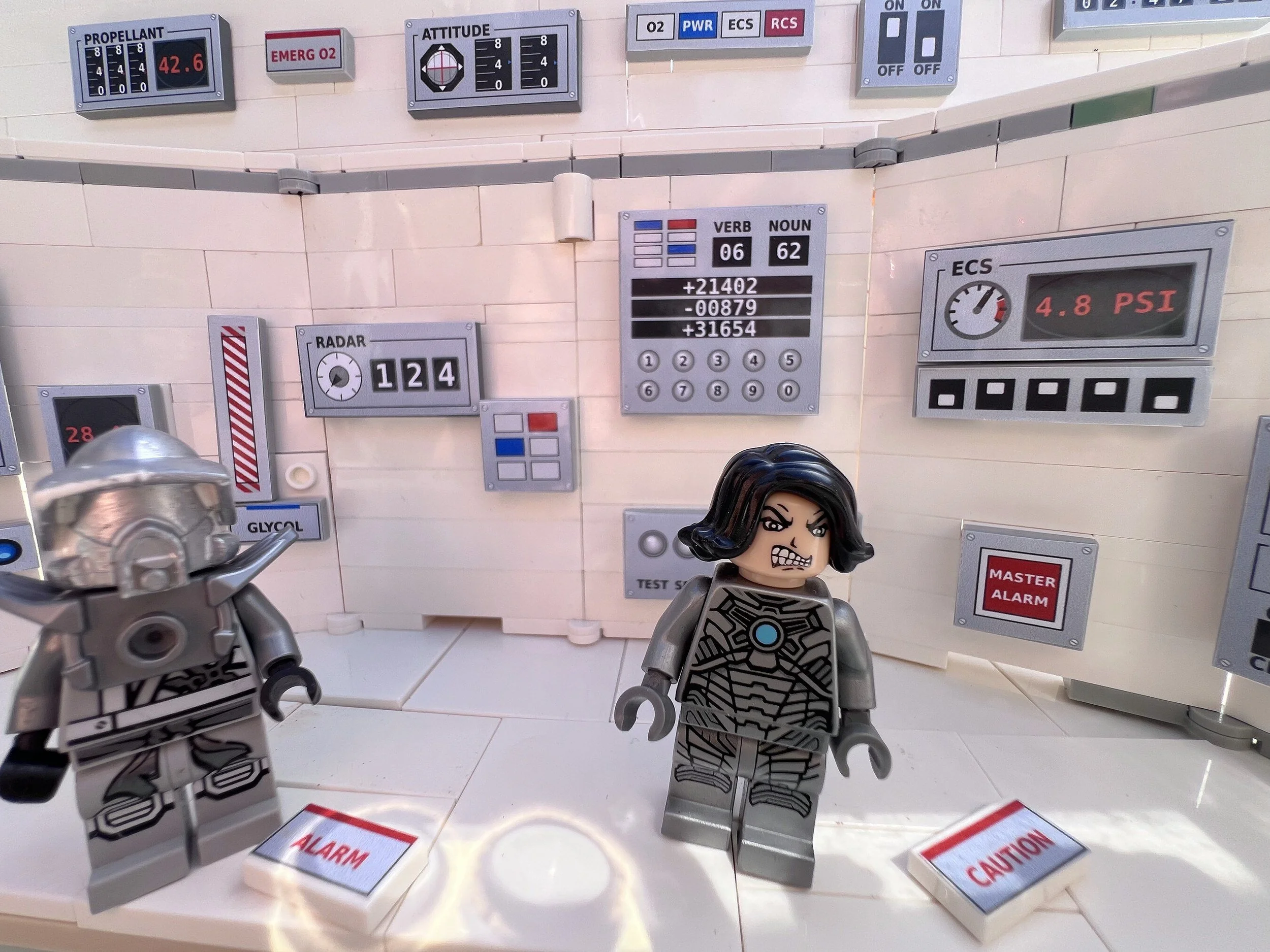
LEGO Spaceship MOC: What Goes Inside the Hull
Most spaceship interiors stop at the pilot seat. The rest of the hull is where a ship stops looking like a box: the power wall, the life support bay, the caution panel by the hatch. Here is what goes where.
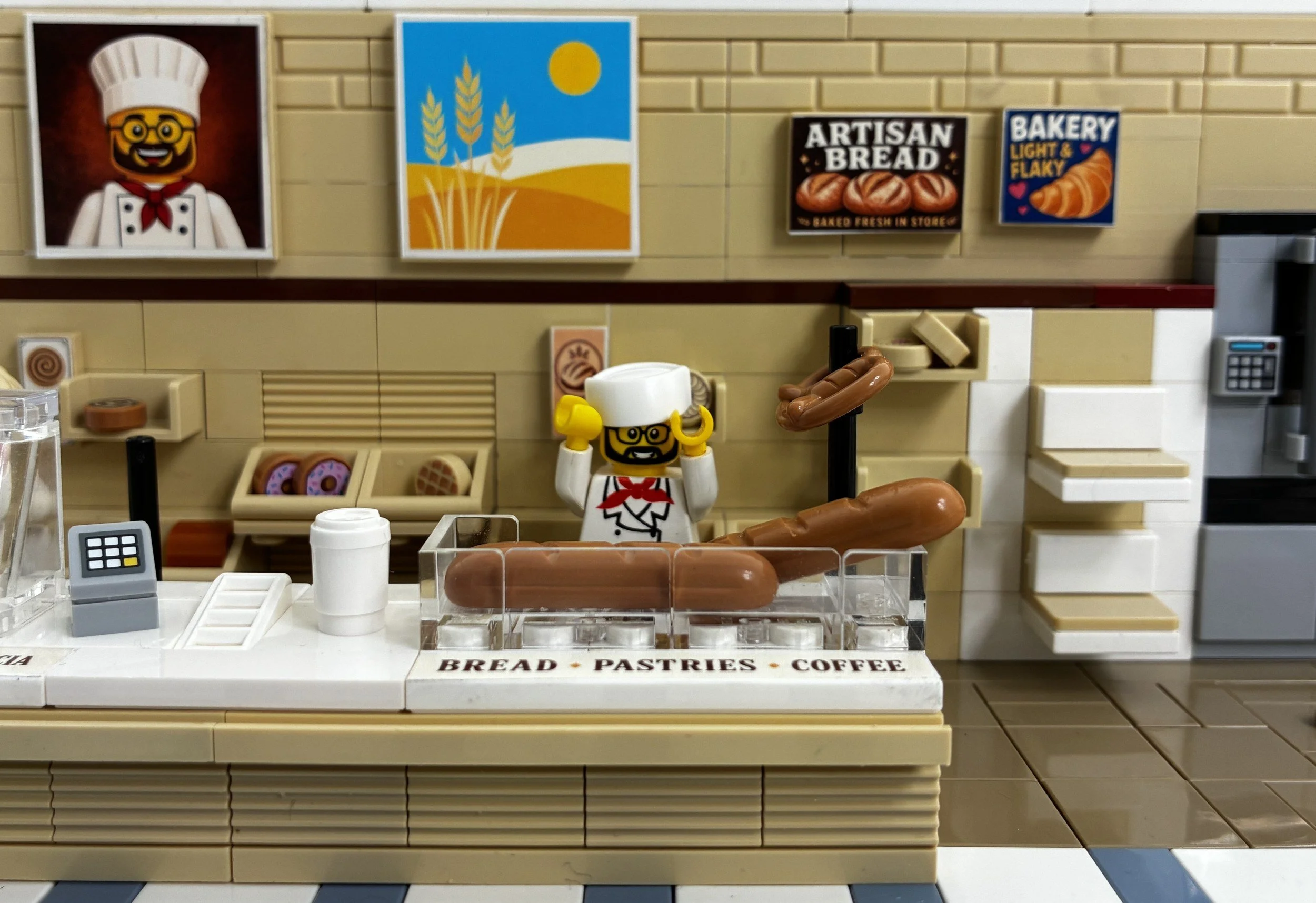
LEGO Modular MOC: Detailing a Building So It Reads Real
The walls are up and it still looks like a model. Three details that turn a modular building into a shop, and why the tile decides the sign.
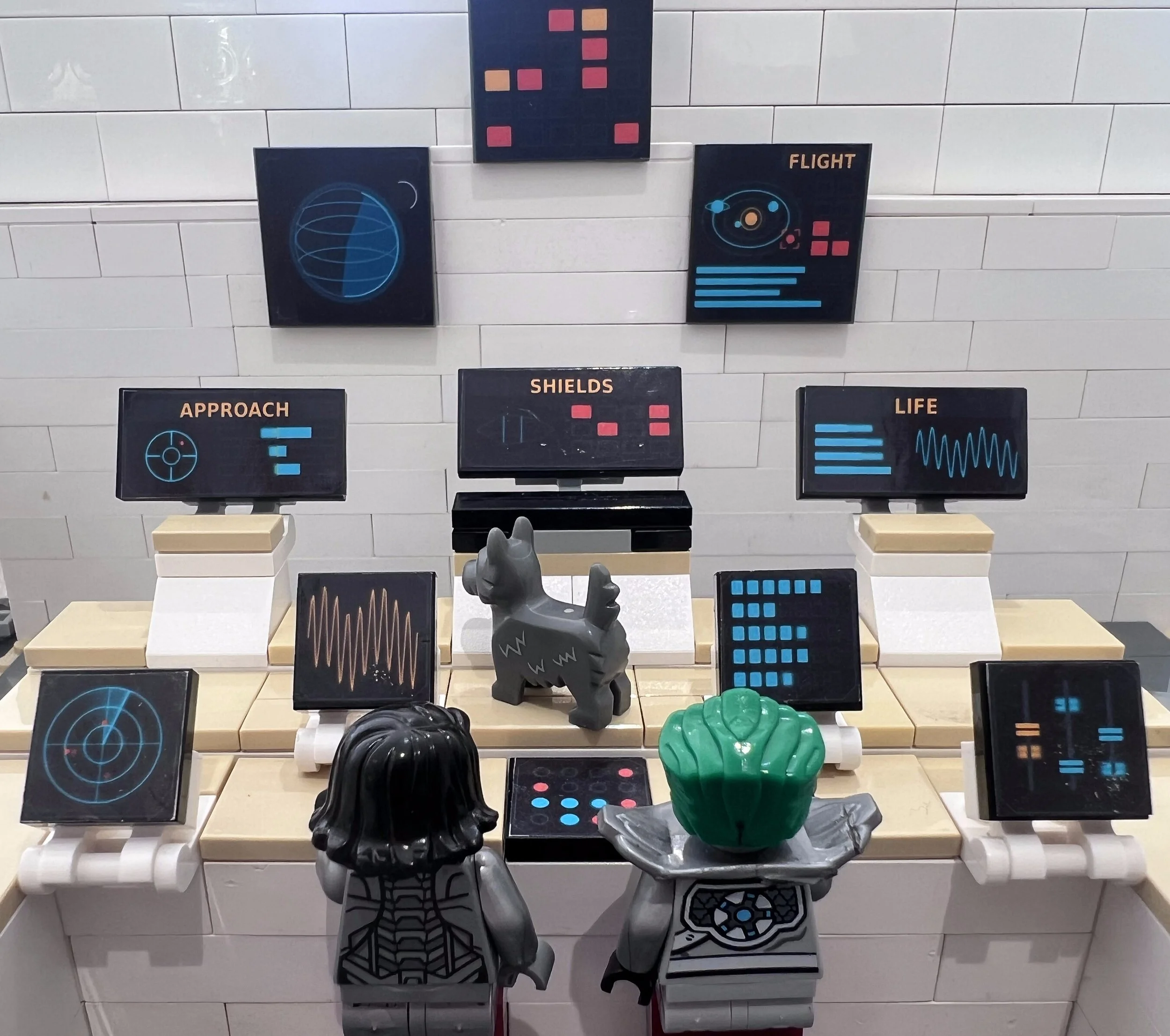
What Goes Inside a Spaceship Cockpit
You have built the hull, the engines look right, and then you open it up and the inside is bare studs and a chair.
Cockpit interiors are the part almost everyone leaves until last.
Here is what actually goes on the wall, and what real spacecraft taught us about arranging it.
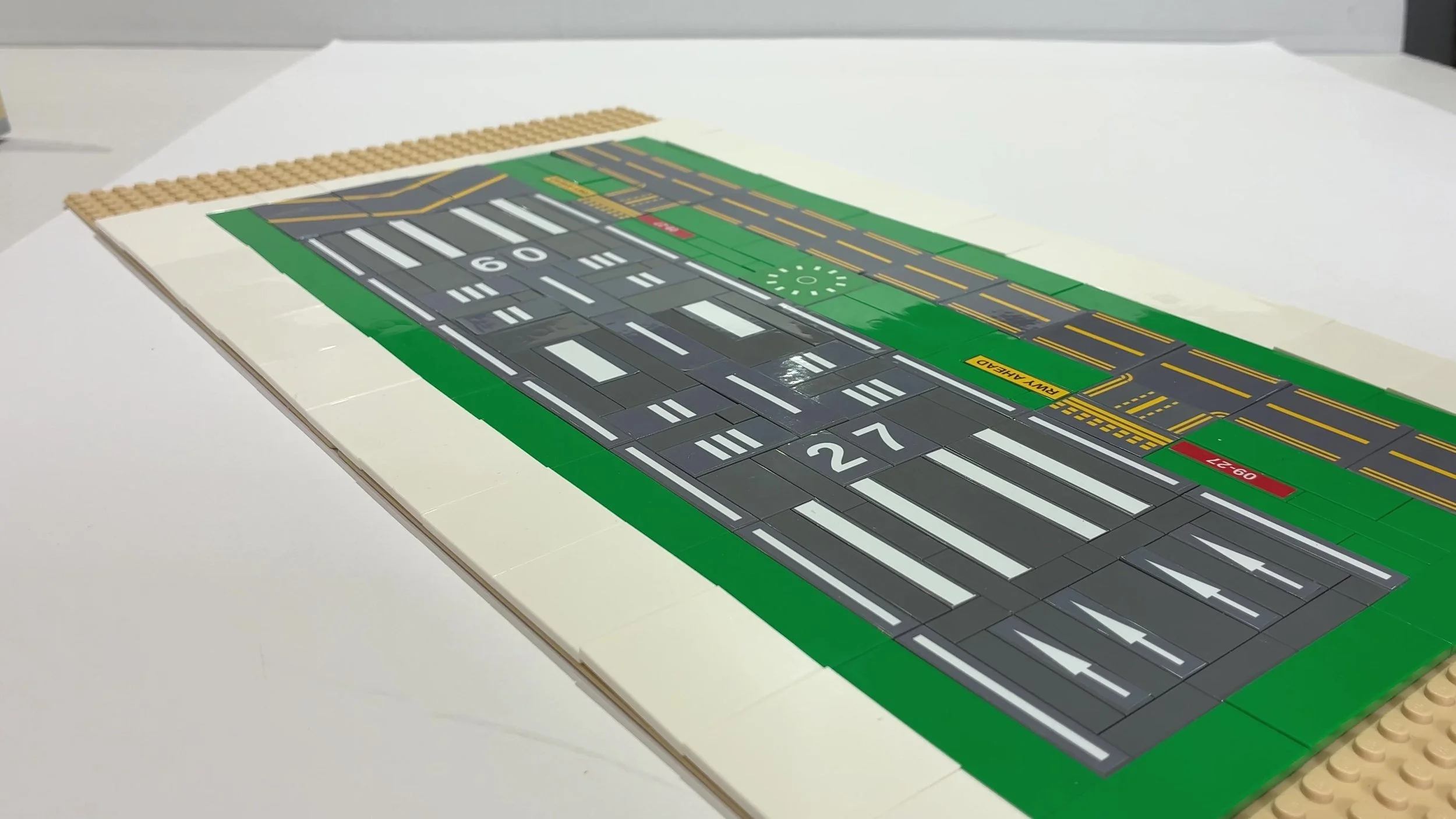
The runway that taught us to leave gaps
Look closely at the edge of our runway and the yellow lines are broken. A real airfield does not do that, and neither did our first design. Then we built it, and found out why every solid line across separately placed tiles is a trap.

The Seer and the Owl: two ways of seeing in the dark
She is looking into the crystal ball. So is the owl. We still cannot decide which of them spotted something first, and that small doubt turns out to be the whole appeal of a seer’s tower.
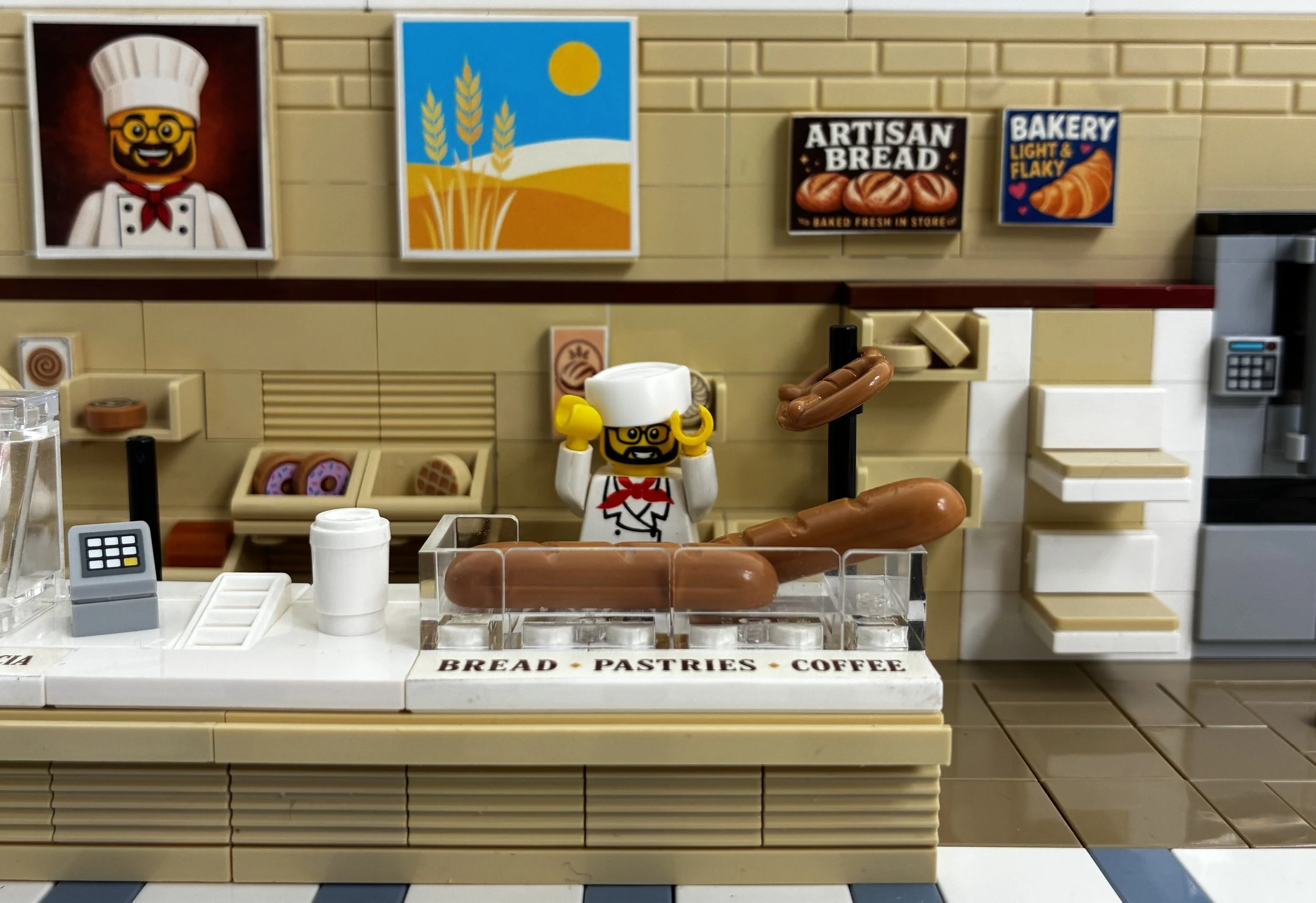
How to make a LEGO bakery look real
A brick bakery reads as a bakery the moment you add bread. What makes people stop and look is the paperwork: the sign over the door, the prices in the window, the little artisan boast on the wall. Here is where each one goes.
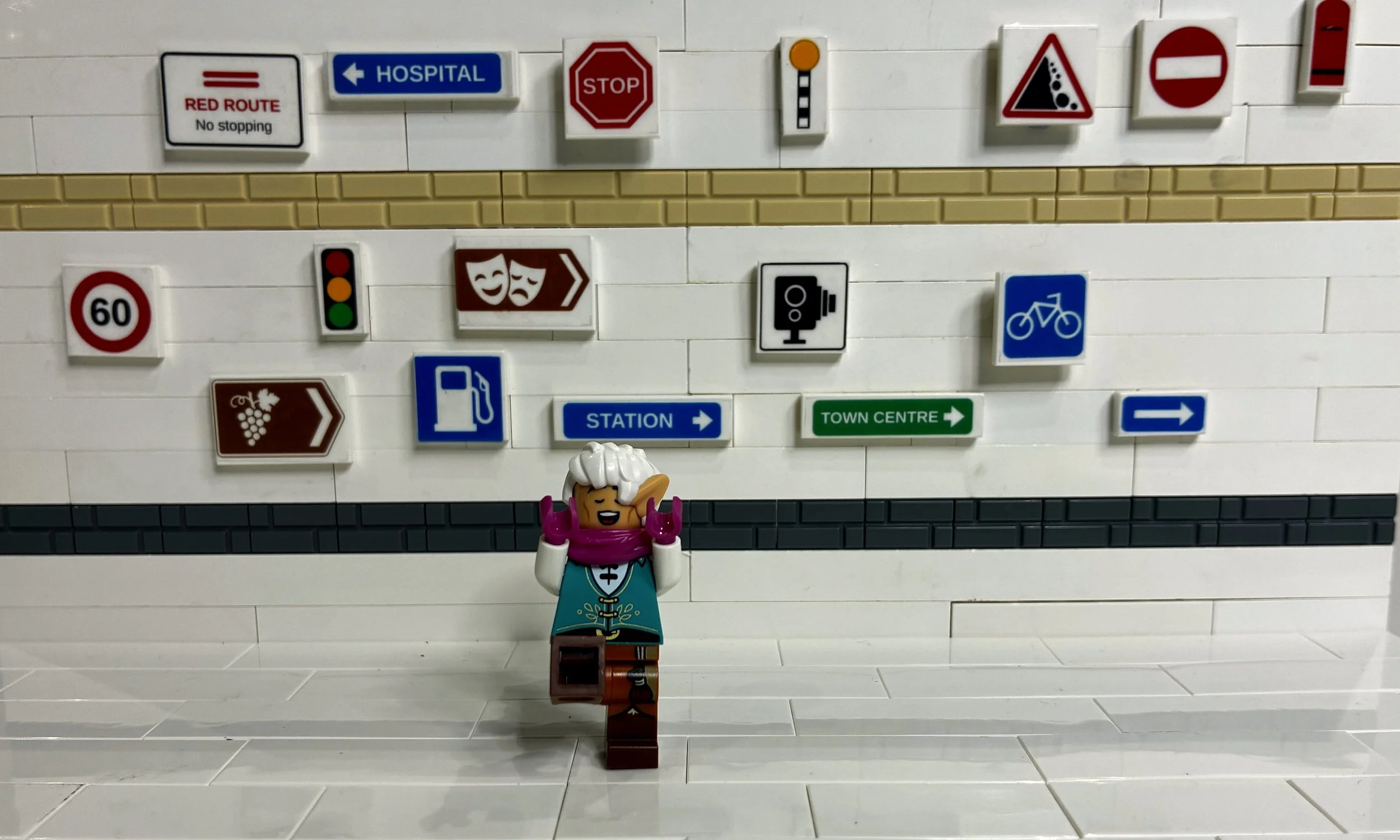
Finishing a LEGO city street: signs that sell the scene
Which LEGO road signs make a street feel real, where they go, and how to pick exactly the ones your build needs in a few seconds.
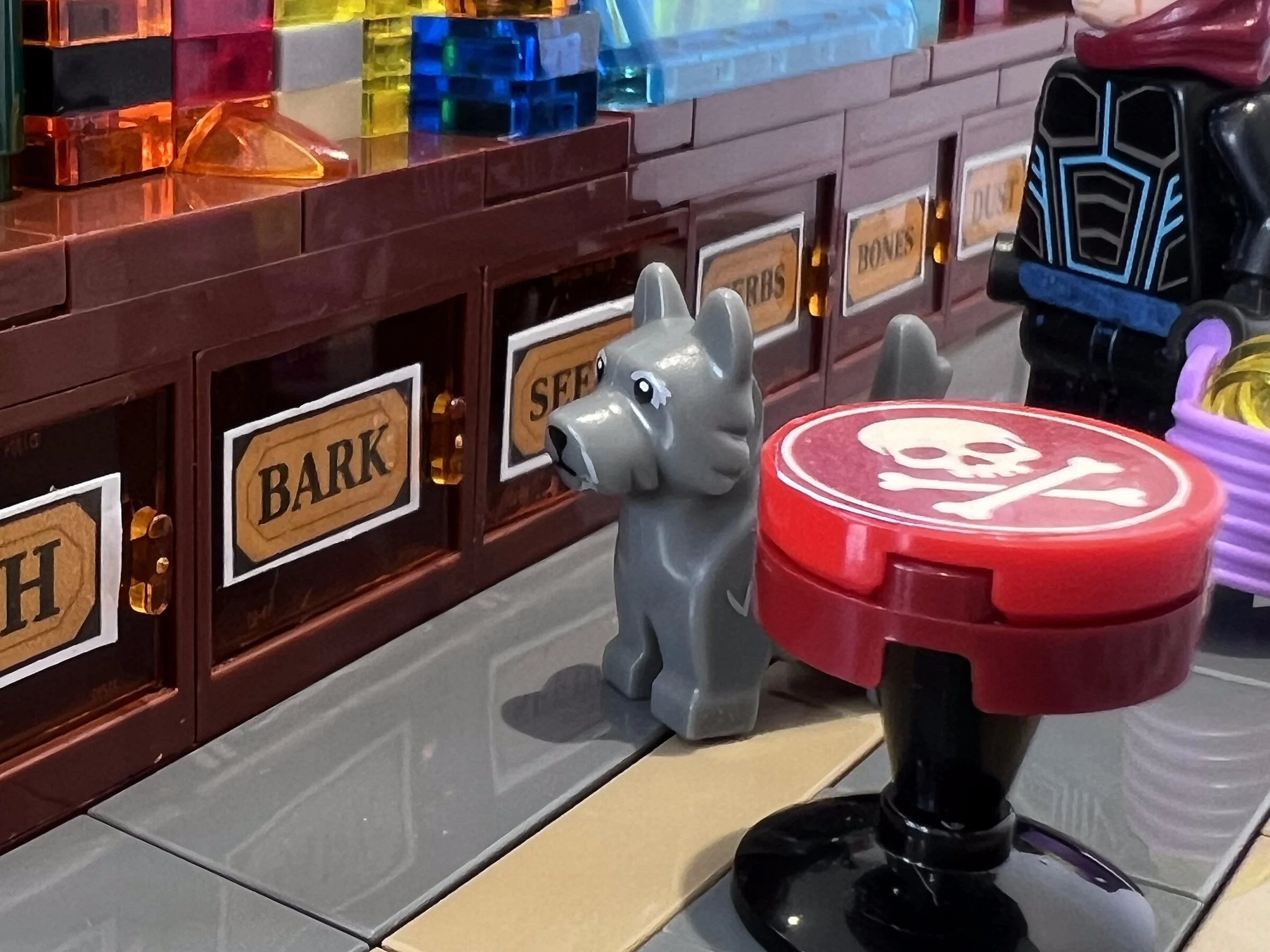
Meet Chicho, the smallest member of staff
Every shop on our street has someone who runs it. The Daily Grind has two: Brenda Hart, who runs it with warmth and standards, and Chicho, the terrier who is fairly sure he runs it instead.
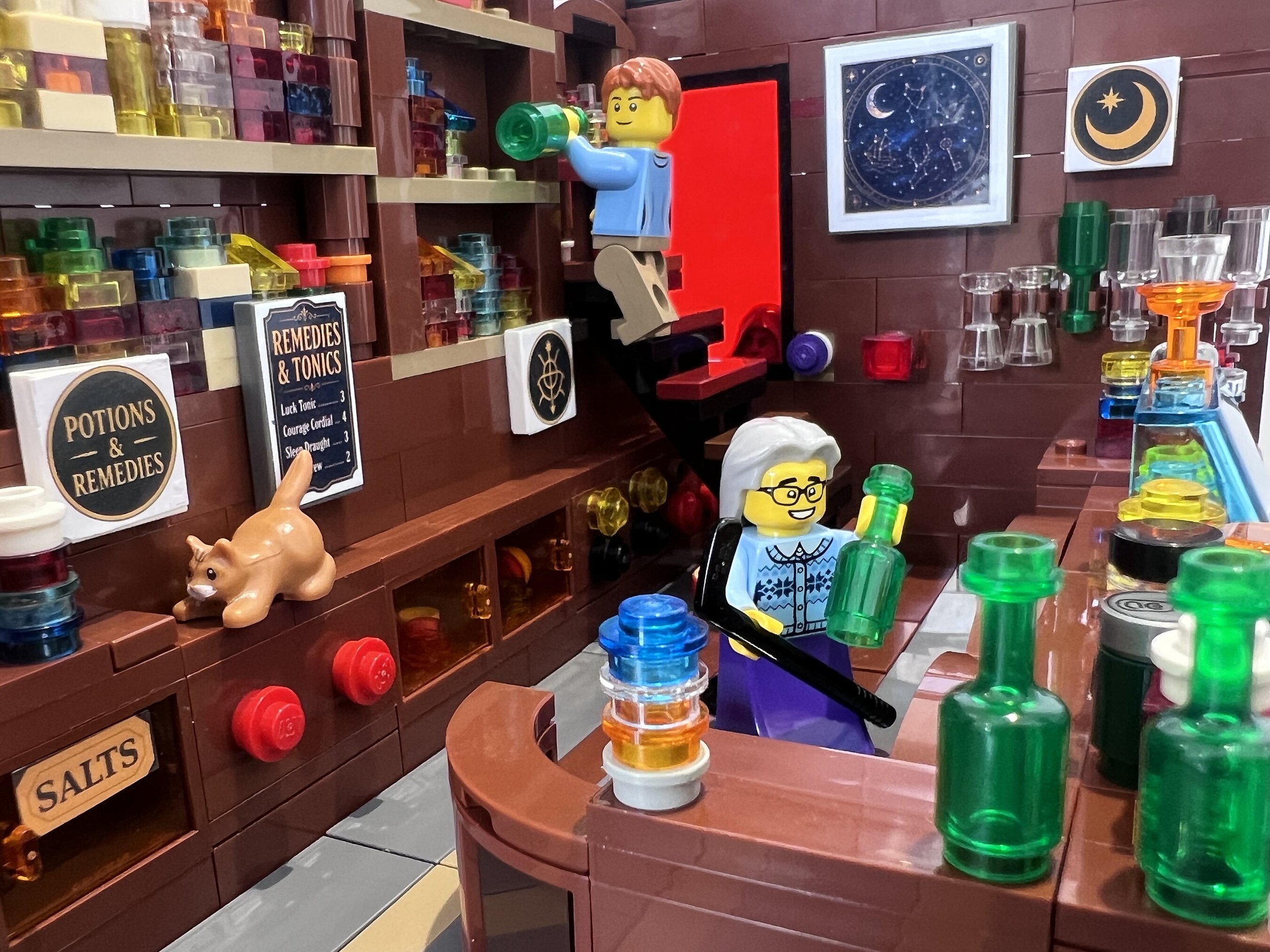
Inside the Apothecary: 89 potion labels and where they came from
A shelf reads as stocked when the labels disagree with each other. How we drew 89 potion labels, drawer plates and curios for The Last Light Apothecary, and where to put them.
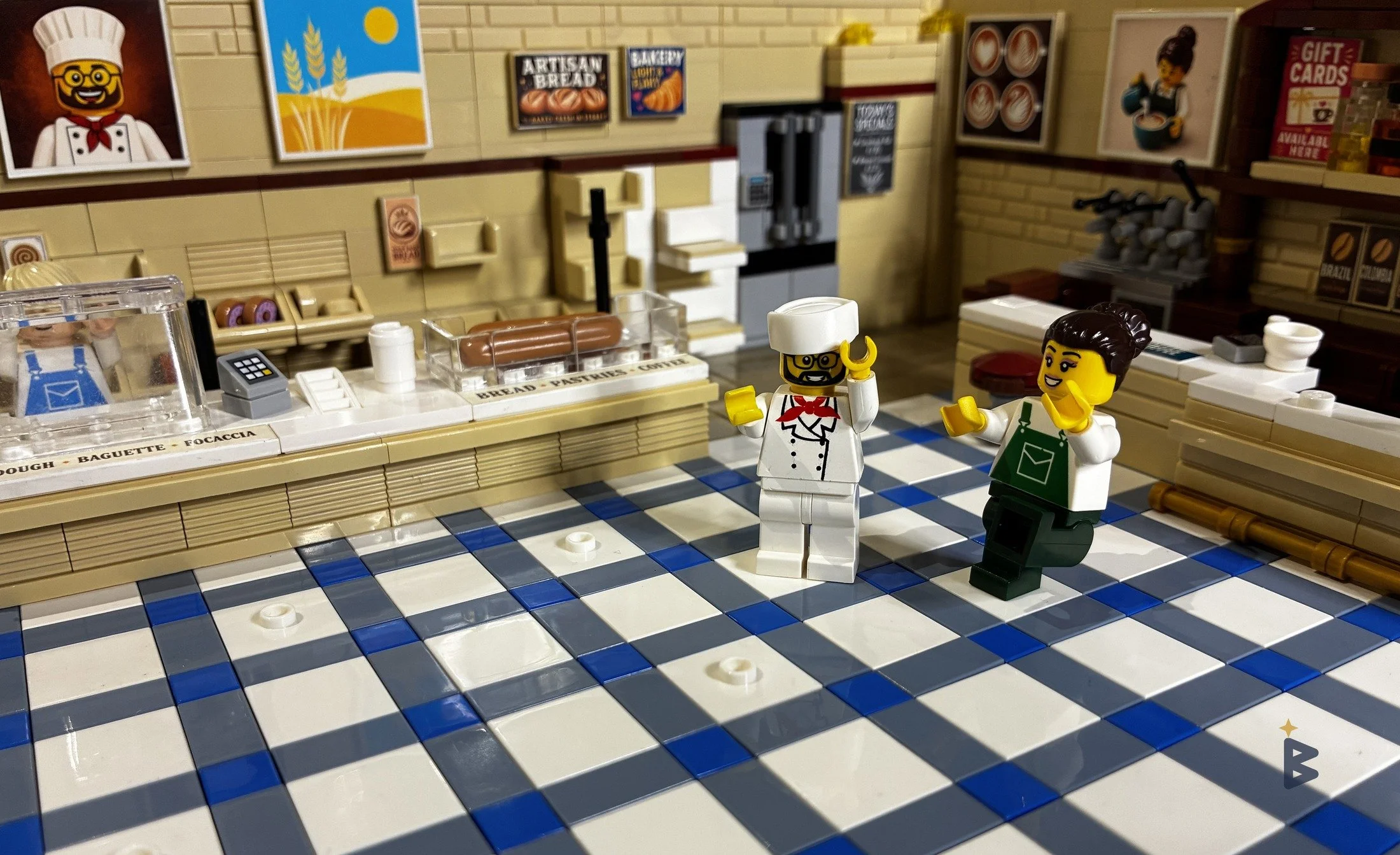
How to detail any LEGO MOC: the small stuff that sells it
A MOC can be beautifully built and still feel empty. What fills it is rarely another brick: it is the printed, painted, lived-in detail. Here is the small stuff that turns a model into a place, whatever you are building.
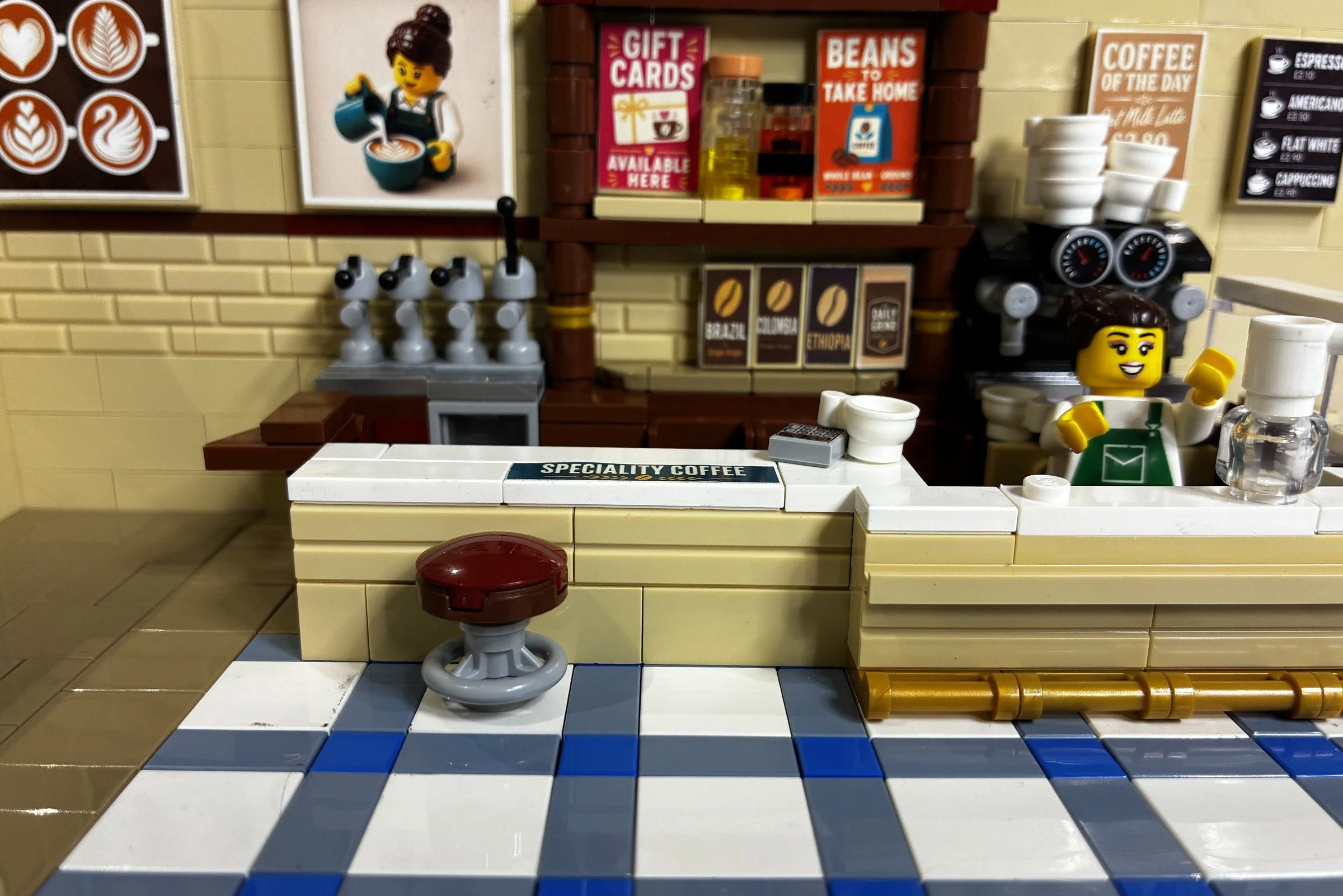
Five details that make a LEGO modular café look real
Bunting and big builds are the easy part. It's the small printed details, menu boards, price cards, a chalk A-board, that make a brick-built café look real. Here are five, and the sheet that does the heavy lifting.