
Inside the Apothecary: 89 potion labels and where they came from
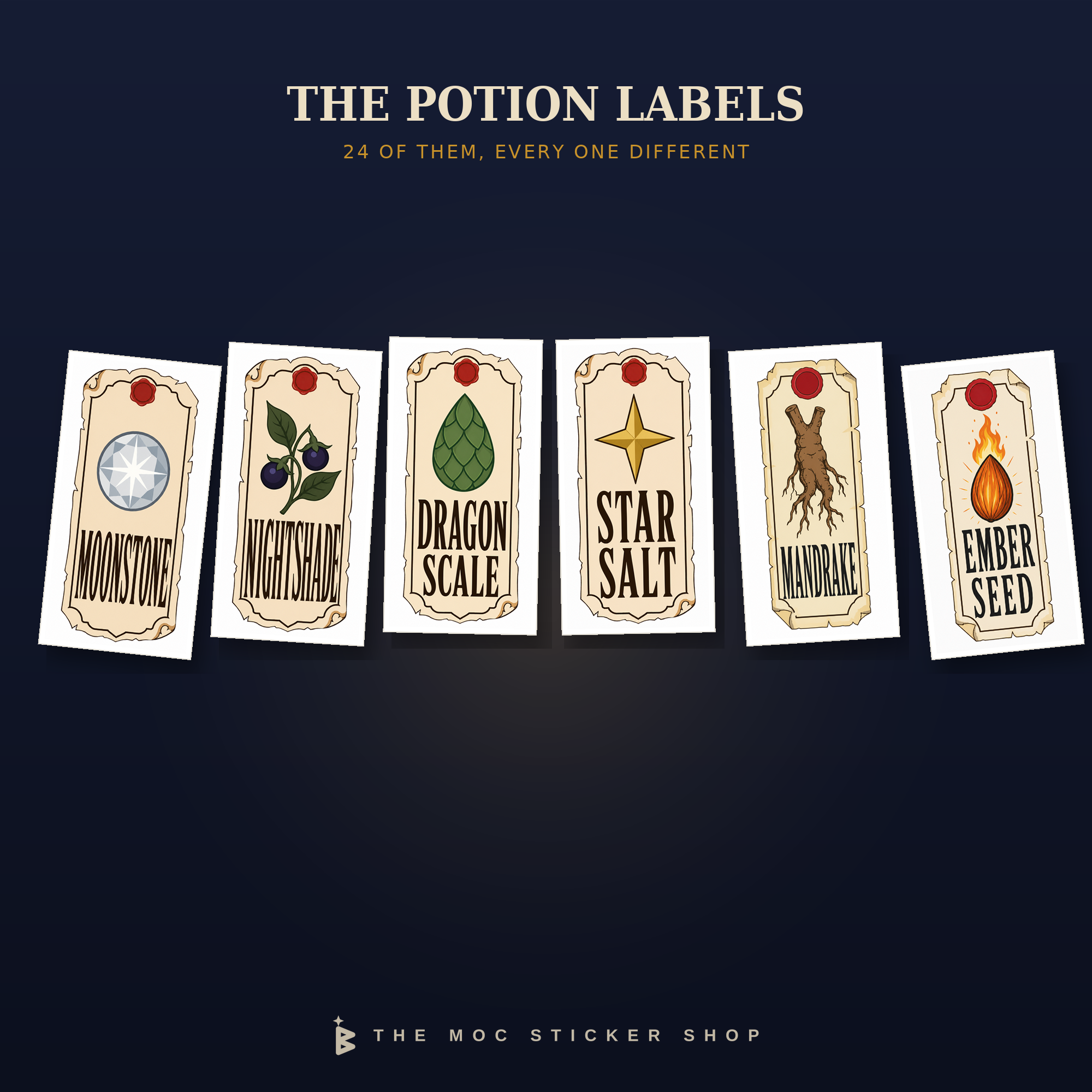
A wizard’s shop is only as convincing as its clutter.
When we drew The Last Light Apothecary, the aim was never a handful of pretty potion labels. It was a whole working stock, the kind of shelf that looks as though it has been filling up quietly for three hundred years.
So the sheet is built the way a real shop takes stock. Potion labels first, dozens of them, because no apothecary ever sold just one tonic. Then drawer plates for the wall of small wooden drawers, ROOTS, BARKS, DOWN, the plain things a shop actually keeps and never advertises. Then signs, charts, a specimen or two, and a nameplate for Morwenna Sage. Morwenna keeps the shop. She is unhurried, she misses nothing, and she half suspects who Bard, the phantom artist who leaves these sheets overnight, really is.
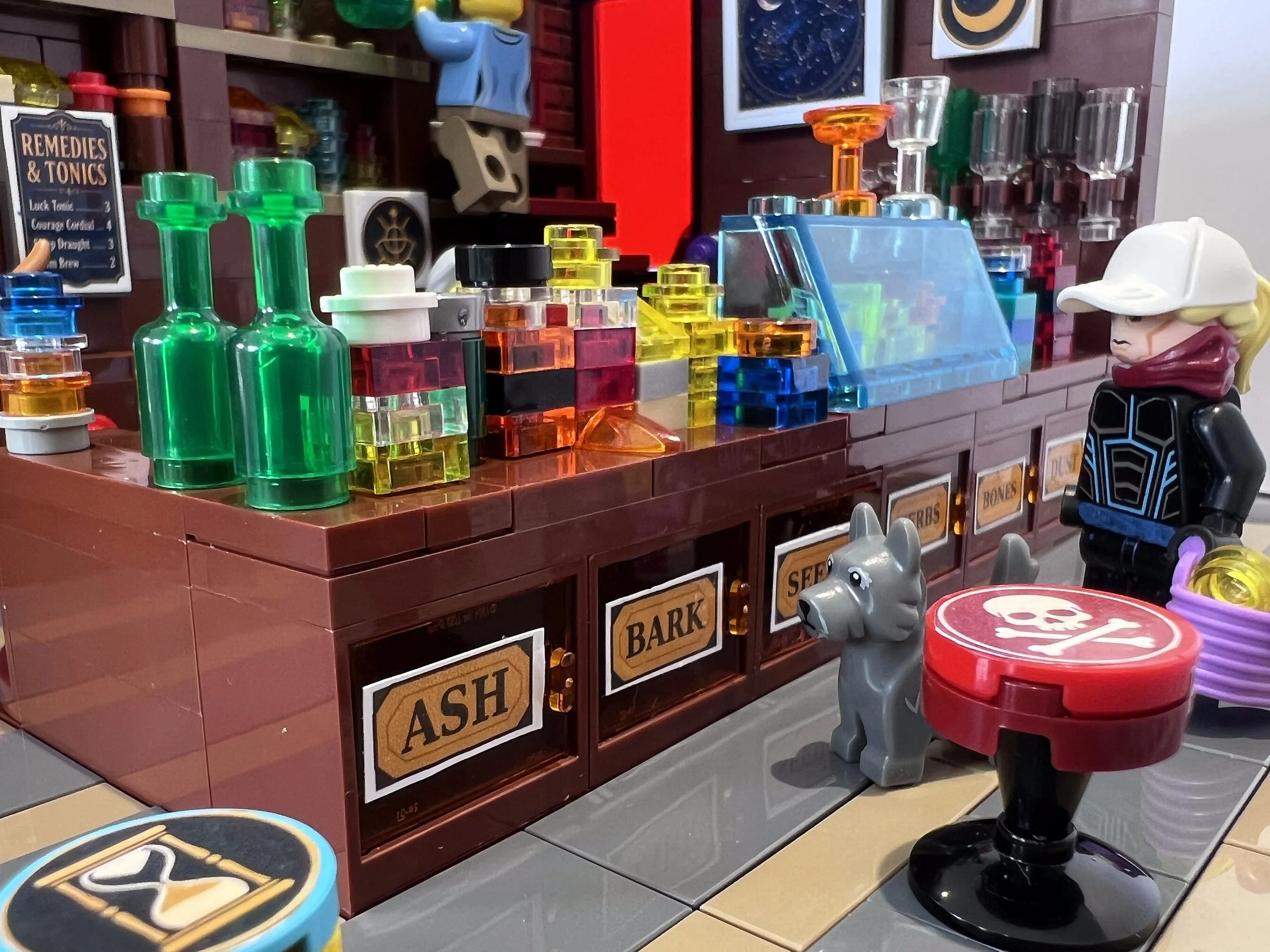
Eighty-nine designs in all, and every one earns its place on the shelf.
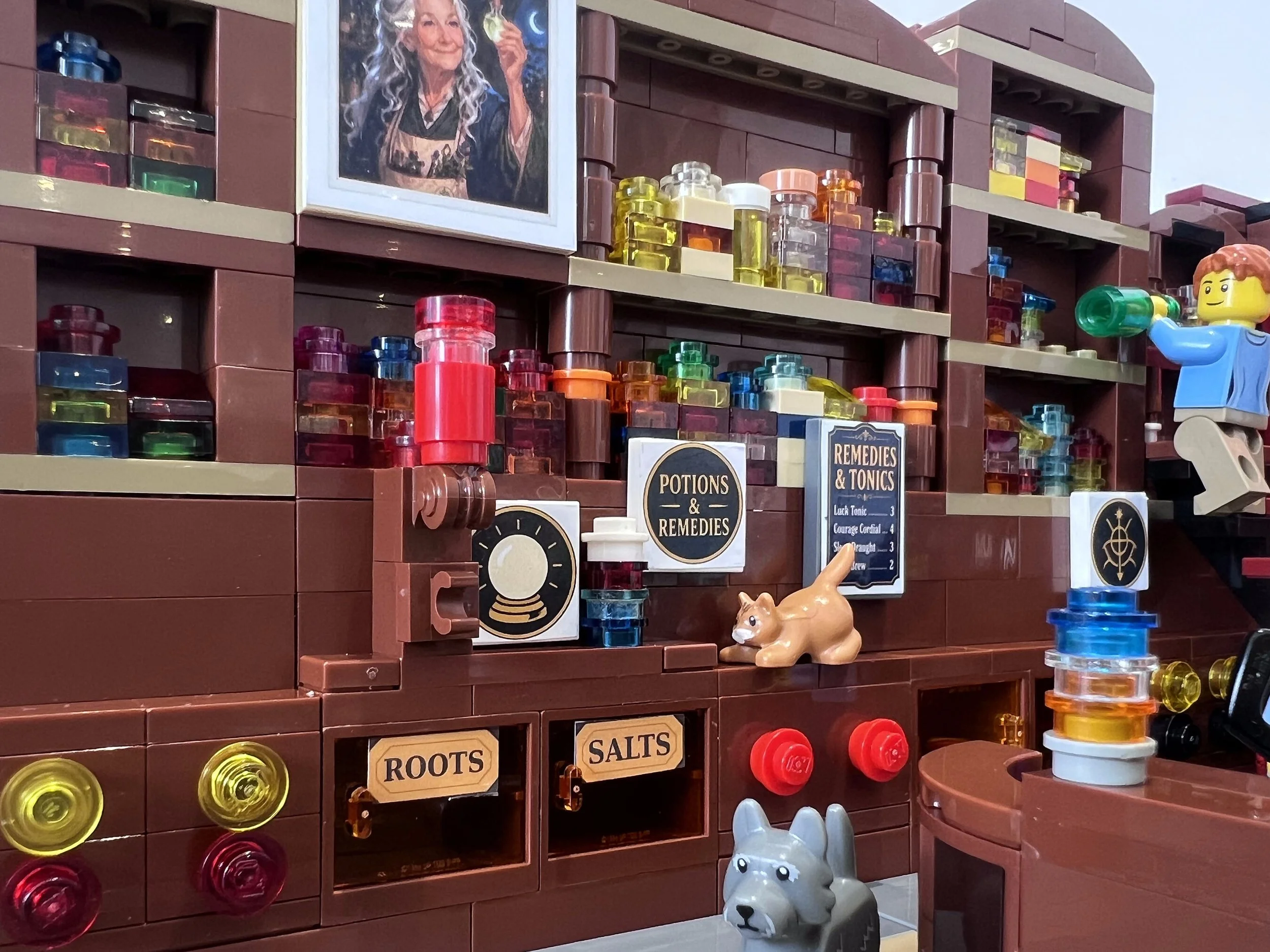
Where the potion labels actually go
A shelf reads as stocked when the labels disagree with each other. Same shop, different hands, different decades. A few tall bottles carrying long labels, a row of squat ones with small round labels, and two or three with nothing on them at all, because somebody used the last of it and never relabelled the jar.
Put the boldest label at eye height and let the rest fall away from it. Crowd the low shelves and leave the top one thin. A wall of identical labels reads as a warehouse, not an apothecary.
The same sheet suits a witch’s cottage or a D&D scene just as well, and it pairs with our Spells and Scrolls sheet if you want circles, wards and runes on the floor as well as on the shelf.
You cut the decals out yourself, and you place them on your own tiles and drawers. We make the paperwork. The shop is yours.
