
LEGO Modular MOC: Detailing a Building So It Reads Real
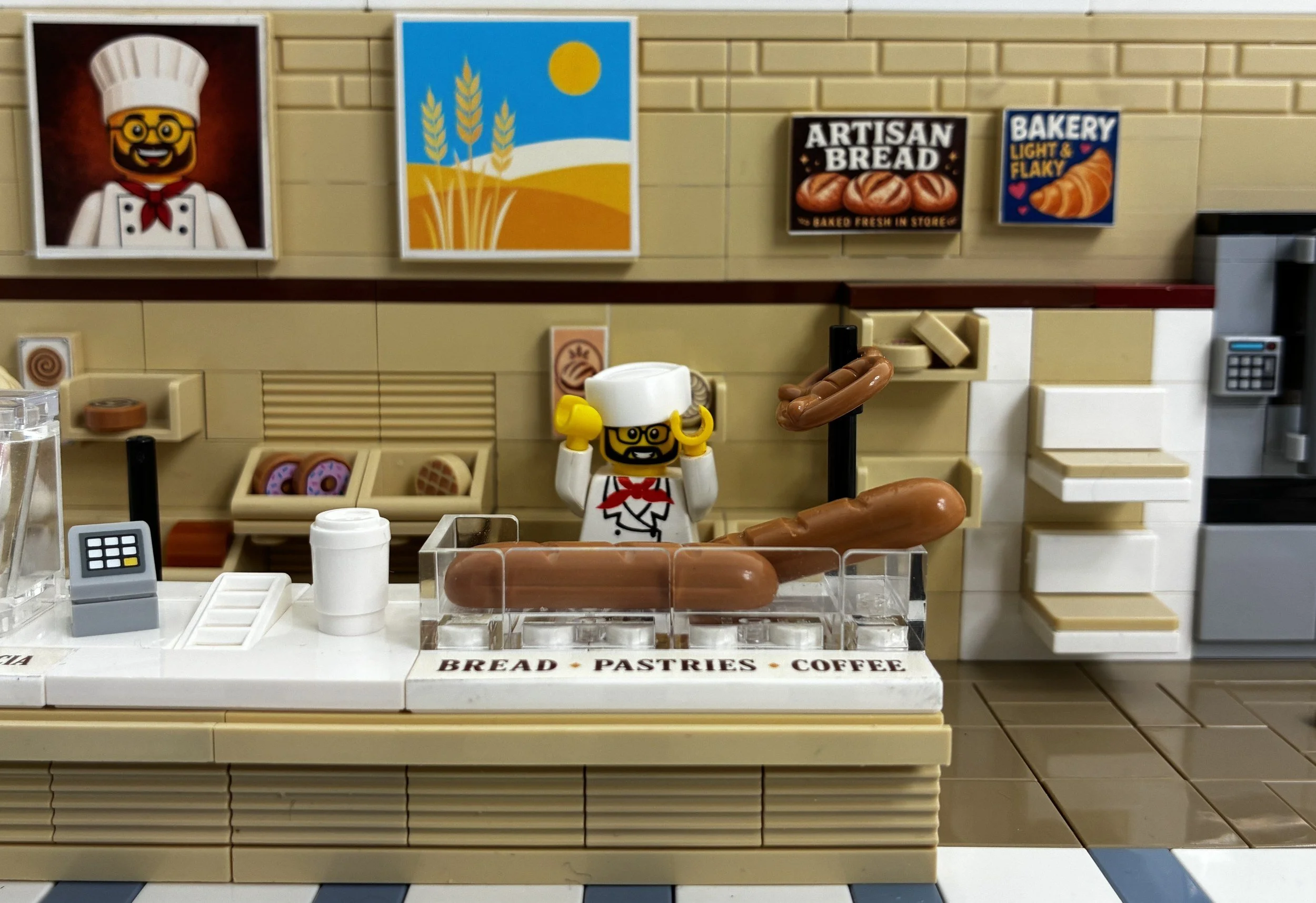
A LEGO modular MOC is usually finished long before it looks finished. The walls are up, the windows are in, the roof line is right, and the whole thing still reads as a model of a shop rather than as a shop. The gap is almost never the brickwork. It is that nothing on the building tells you what it sells.
Three things close it, and none of them need a rebuild.
The fascia decides what the shop is
A blank band above the windows is the biggest tell there is. Put a name on it and the building changes trade in one move. Bob the Baker runs the Golden Crust on our own street, and the day his fascia went on, the same beige walls stopped being a box with windows and started being a bakery. Our LEGO bakery stickers are drawn for exactly that band, along with the window vinyls, the shelf labels and the framed prints behind the counter. Fifty seven designs, across the tile sizes a modular building actually uses.
The window is where a shop earns its living
Real shop fronts are busy at eye level. Opening hours, a menu, a card in the corner of the glass that has been there too long. An empty pane reads as a showroom nobody has moved into yet. Brenda runs the Daily Grind two doors down, and her windows carry the price board, the menu and the little signs that say somebody works there. The coffee shop sheet is fifty five designs built for that, from the counter strip to the wall art.
Inside, screens do the work signs cannot
The moment a modular opens at the back, the interior is on show, and an empty one undoes everything the front achieved. A till display, a television in the corner, a board on the wall. The screen and display sheet is fifty six different working displays, one of each, which is usually enough to carry several buildings in the same street rather than just one.
Draw to the tile, not to the wall
This is the part that catches people out. A sign is not sized to the space on the wall, it is sized to the tile it sits on, so a 2×2 sign is drawn as a 2×2 sign. Before you order anything, look at the facade and work out which smooth tiles you have and where. The sheet you want is decided by tile size at least as much as by theme. You cut them out yourself, and each one sits very slightly inside the tile face so no edge shows.
One building first
It is tempting to do the whole row at once. Do not. Finish one building, stand it on the table next to an undetailed one, and you will know immediately which details were doing the work and which you can skip on the next five. That is a much cheaper way to learn it than drawing a whole street.
And if the sign your building needs does not exist yet, that is what custom LEGO stickers are for. Tell us the trade and the tile sizes, and we will draw it.
